
If you’ve ever wondered why that promising clinical trial took six months to activate when everyone thought it would take six weeks, you’re not alone. The study start-up phase is clinical research’s best-kept secret—a complex orchestration of activities that happens largely behind the scenes, invisible to most research teams until delays start mounting.
Most research coordinators and principal investigators see only the tip of the iceberg: the final protocol review, the site initiation visit, and the green light to start enrolling. But beneath the surface lies a intricate web of interdependent processes, stakeholder negotiations, and regulatory hurdles that can make or break a trial’s timeline before the first patient ever walks through the door.
In this deep dive, we’ll pull back the curtain on the study start-up process to reveal what’s really happening during those seemingly quiet months. You’ll discover why 80% of clinical trials experience startup delays, learn to identify the hidden bottlenecks that research teams rarely see, and gain actionable insights to better navigate this critical phase. Whether you’re a seasoned research professional or new to clinical trials, understanding these behind-the-scenes dynamics will transform how you approach study planning and execution.
The Iceberg Effect: What You See vs. What’s Really Happening
When research teams think about study start-up, they typically focus on the visible milestones: IRB approval, contract signing, and site initiation. These represent maybe 20% of the actual work happening during the start-up phase. The remaining 80% occurs behind closed doors, involving stakeholders your research team may never interact with directly.

The visible activities include protocol finalization, informed consent development, and site initiation visits. These are the checkboxes that research coordinators track, the meetings that principal investigators attend, and the documents that regulatory affairs teams submit. They’re important, certainly, but they’re only the final outputs of much more complex processes.
The hidden activities encompass everything from initial feasibility assessments and vendor negotiations to budget modeling and regulatory strategy development. According to recent industry data, the average study start-up timeline ranges from 3-6 months for most trials, with some academic medical centers reporting timelines extending beyond 8 months. These extended timelines aren’t due to inefficiency—they reflect the true complexity of coordinating dozens of interdependent processes across multiple organizations.
Pro tip: Start tracking the “invisible” milestones in your organization. Document when feasibility assessments begin, when budget negotiations start, and when regulatory submissions are actually prepared (not just submitted). This visibility will dramatically improve your timeline predictions.
The Hidden Phases: What Happens Before You Know a Study Exists

Before a research coordinator ever receives a protocol for review, multiple critical phases have already been completed—or in many cases, are still underway. Understanding these hidden phases is crucial for realistic timeline planning and resource allocation.
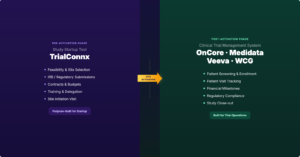
Feasibility and Site Selection (1-2 months)
Long before your site receives that initial inquiry, sponsors and CROs have been conducting extensive feasibility assessments. They’re analyzing patient databases, reviewing site performance metrics, and conducting preliminary outreach to gauge interest. A recent study by the Tufts Center for Drug Development found that 37% of selected sites experience under-enrollment, and 11% fail to enroll a single patient. This sobering statistic drives sponsors to cast wide nets during the feasibility phase, often contacting 3-4 times as many sites as they plan to activate.
The site selection process itself involves multiple stakeholders: medical monitors reviewing investigator qualifications, data managers assessing technology capabilities, and project managers evaluating logistical feasibility. Each evaluation can take weeks, and sites rarely see this comprehensive assessment happening in the background.
Regulatory Strategy Development (2-4 weeks)
While research teams often think regulatory approval starts with IRB submission, the actual regulatory strategy begins much earlier. Sponsors must determine which regulatory pathways to pursue, prepare submission timelines for multiple jurisdictions, and coordinate with regulatory consultants. For global studies, this phase can involve navigating different regulatory requirements across multiple countries, each with unique submission requirements and review timelines.
Contract and Budget Template Development (3-6 weeks)
The budget negotiations that sites experience represent the final stage of an extensive financial planning process. Sponsors must develop budget templates that account for site variations, regulatory requirements, and sponsor-specific procedures. Recent survey data shows that 49% of sites report declining studies due to insufficient investigator grants relative to increasing costs, highlighting the critical importance of this often-invisible budget development phase.
The Stakeholder Network: More Complex Than You Think

One of the most underestimated aspects of study start-up is the sheer number of stakeholders involved in decision-making. While research teams typically interact with sponsors, CROs, and internal committees, the actual network includes dozens of additional players working behind the scenes.
Internal Stakeholders extend far beyond the research team. Finance departments must approve budget structures, legal teams review contract terms, information technology groups assess system compatibility, and facilities management evaluates space requirements. In academic medical centers, the complexity multiplies with additional layers including department heads, scientific review committees, and institutional leadership.
External Stakeholders create even more complexity. CROs coordinate with multiple vendors for laboratory services, imaging, and data management. Regulatory consultants work with sponsors to prepare submissions. Even seemingly simple decisions, like selecting an electronic data capture system, can involve negotiations between sponsors, CROs, technology vendors, and site IT departments.
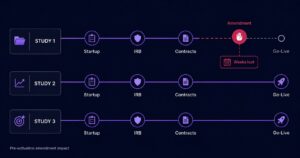
The challenge isn’t just the number of stakeholders—it’s the interdependencies between their decisions. A change in the laboratory vendor can affect site training requirements. A regulatory feedback can impact budget calculations. A technology update can delay site initiation visits. These cascading effects are rarely visible to research teams but can add weeks or months to start-up timelines.
Practical insight: Map out all the stakeholders involved in your study start-up process, including those you don’t directly interact with. Understanding these relationships will help you anticipate delays and communicate more effectively with your immediate contacts.
Timeline Reality Check: Expected vs. Actual

The disconnect between expected and actual study start-up timelines represents one of the most frustrating aspects of clinical research. While industry guidelines suggest 90-day activation timelines1, the reality is often quite different.
Recent benchmarking data reveals that academic medical centers report median activation times of 167 days, nearly double the recommended timeline. Independent sites fare somewhat better at approximately 4.37 months (131 days), but still significantly exceed the 90-day target. These delays aren’t typically due to inefficiency at the site level—they reflect the true complexity of the start-up process.
Common Timeline Underestimations:
- Contract negotiations: Budgeted for 2-3 weeks, often take 6-8 weeks
- Regulatory submissions: Expected in 1-2 weeks, frequently require 4-6 weeks for complete packages
- Site training coordination: Planned for 1 week, commonly extend to 3-4 weeks due to scheduling conflicts
- Technology setup: Anticipated in days, often require weeks for testing and validation
The impact of these timeline extensions goes beyond mere inconvenience. Industry estimates suggest that each day of delay can cost sponsors between $600,000 and $8 million, depending on the study phase and therapeutic area. For research sites, delays can disrupt resource planning, affect staff allocation, and impact relationships with patient populations eagerly awaiting new treatment options.
Strategic tip: Build buffer time into your start-up planning. Industry best practices suggest adding 25-30% to initial timeline estimates to account for the inevitable delays and dependencies that emerge during the start-up process.
The Hidden Challenges: What the Data Reveals

Understanding the challenges that research sites face during study start-up provides crucial insight into why timelines often extend beyond expectations. Recent survey data from over 500 clinical research sites reveals the scope of these challenges.
Staffing and Retention Leads the Pack
With 63% of sites reporting staffing and retention as their top challenge1, it’s clear that human resources significantly impact start-up timelines. Staff turnover during the start-up phase can reset training requirements, delay site readiness assessments, and force renegotiation of delegation logs. The challenge intensifies when experienced research coordinators leave mid-startup, taking institutional knowledge and vendor relationships with them.
Technology Burden Creates Hidden Complexity
While only 18% of sites explicitly cite technology as a top challenge, the reality is more nuanced. Modern clinical trials require sites to manage an average of six or more technology logins per study, with 67% of sites reporting that technology setup and training is more burdensome now than five years ago. This technology proliferation creates hidden delays during start-up as sites must coordinate training across multiple systems, validate data integrations, and ensure staff competency.
Study Complexity Compounds Everything
The 36% of sites reporting trial complexity as a major challenge1 reflects a fundamental shift in clinical research. Modern protocols require coordination across multiple specialties, involve sophisticated inclusion/exclusion criteria, and often include complex procedures requiring specialized training. During start-up, this complexity translates into extended site assessment periods, more elaborate training requirements, and longer validation processes.
Communication Gaps Amplify Delays
Though not always captured in survey data, communication breakdowns represent one of the most significant hidden challenges. When sponsors, CROs, and sites use different communication platforms, timelines, and expectations, simple clarifications can take days or weeks to resolve. These delays compound throughout the start-up process, often resulting in last-minute scrambles to meet activation deadlines.
Best Practices for Better Visibility and Control
Armed with understanding of what’s really happening during study start-up, research teams can implement strategies to gain better visibility and control over the process.
Create Early Warning Systems
Develop relationships with contacts who can provide insight into the hidden phases of start-up. CRO project managers, sponsor study directors, and vendor representatives often have access to timeline information that doesn’t make it into standard status reports. Regular check-ins with these stakeholders can provide early warning of potential delays or changes in scope.
Implement Parallel Processing
Rather than waiting for each phase to complete sequentially, identify opportunities for parallel processing. Site training materials can be developed while contracts are under negotiation. Technology validations can begin before final protocol approval. IRB submissions can be prepared in parallel with budget finalization. This approach can reduce overall timelines by 20-30% in many cases.
Standardize Where Possible
Develop standard operating procedures for the aspects of start-up that you can control. Create template delegation logs, standardize training documentation, and develop checklists for site readiness assessments. Standardization reduces the cognitive load during start-up and minimizes the risk of overlooking critical steps.
Build Contingency Plans
Develop backup plans for common start-up challenges. Identify alternative staff who can be trained if primary coordinators become unavailable. Establish relationships with backup technology vendors if primary systems experience issues. Create communication escalation procedures for when standard channels break down.
Key Implementation Tips:
- Document everything: Create detailed records of start-up activities, timelines, and challenges for future reference
- Communicate proactively: Don’t wait for problems to surface—establish regular check-ins with all stakeholders
- Plan for the worst-case scenario: Build timelines that assume delays rather than hoping for best-case outcomes
- Celebrate small wins: Acknowledge milestone completions to maintain team morale during long start-up periods
Leveraging Technology for Transparency
Modern study start-up management platforms can provide unprecedented visibility into previously hidden processes. While we won’t recommend specific products, understanding the capabilities that technology can provide will help you evaluate solutions for your organization.
Real-time Status Tracking
Look for systems that provide real-time visibility into all start-up activities, not just the milestones you’re directly involved in. The ability to see when vendor negotiations begin, when regulatory submissions are actually prepared, and when stakeholder reviews are scheduled can dramatically improve your timeline predictions.
Automated Communication
Systems that automatically notify relevant stakeholders of status changes, deadline approaches, and document updates can eliminate many of the communication gaps that cause start-up delays. Automated reminders and escalations ensure that nothing falls through the cracks during complex start-up processes.
Centralized Document Management
Platforms that provide centralized storage and version control for all start-up documents eliminate the confusion and delays associated with email-based document sharing. When everyone works from the same document versions and can see real-time updates, coordination becomes significantly easier.
Conclusion
The study start-up timeline is far more complex than most research teams realize, involving dozens of stakeholders, multiple interdependent processes, and numerous hidden phases that occur long before sites receive their first study documents. Understanding this complexity isn’t about accepting longer timelines—it’s about developing realistic expectations, building appropriate contingencies, and implementing strategies that provide better visibility and control.
The research teams that consistently achieve faster, more predictable start-up timelines aren’t necessarily more efficient—they’re better informed about what’s really happening behind the scenes. They build relationships that provide early warning of changes, implement processes that enable parallel work streams, and use technology to gain visibility into previously hidden activities.
By recognizing that study start-up is an iceberg with far more happening below the surface than above, you can better prepare your organization for the realities of modern clinical research and position yourself for more predictable, successful study activations.
Ready to take control of your study start-up process? Download our free Study Start-up Visibility Checklist to identify the hidden phases and stakeholders that impact your timelines. This comprehensive tool will help you map the complete start-up ecosystem for your organization and develop strategies for better oversight and control.