General

Where Study Activation Time Actually Goes, and Why Your Timeline Doesn’t Show It
Activation is reported end to end, which can hide the waiting between stages. What 308 site activations show, and how to find your own handoff gaps.

Activation is reported end to end, which can hide the waiting between stages. What 308 site activations show, and how to find your own handoff gaps.
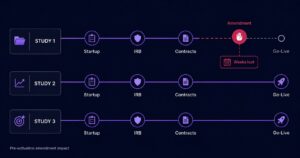
Pre-activation protocol amendments quietly add weeks to trial activation. The fix is not heroics. It is treating startup as its own discipline, with three capabilities: shared readiness, shared language, and a shared clock.
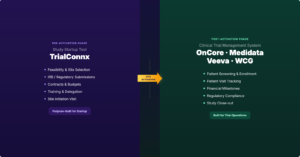
Study startup tools don’t replace OnCore, Medidata Rave, Veeva CTMS, or WCG eResearch. They cover the pre-activation phase and hand off cleanly at site activation. This post shows how a dedicated startup tool fits alongside your existing CTMS — with no integration required to get started.
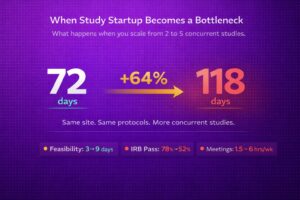
Study startup works fine at one or two studies. Then you add a third, a fourth, a fifth — and the coordination model that kept everything on track collapses. Here’s how to recognize the bottleneck and what to do about it.
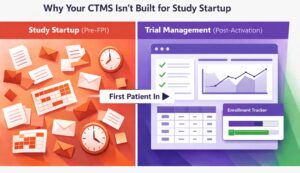
Your CTMS tracks patient screening and enrollment, patient visits, financial milestones – all post-activation. But study startup – regulatory prep, contracts, budgets, feasibility – runs on spreadsheets and email. That gap costs sites weeks per study. Here’s why, and what purpose-built startup tools do differently.
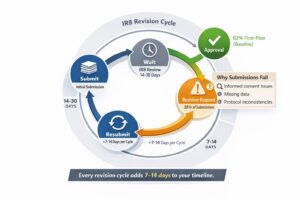
⚡ Quick Answer IRB review times vary widely across institutions – and revision cycles can add weeks to your timeline. FDA’s FY 2023 inspections consistently